The Rise and Fall of SEGA’s Hardware Division: The Rise and Fall of SEGA’s Hardware Division: 7 Defining Chapters of a Gaming Titan’s Epic Collapse

Once the fiery challenger to Nintendo and Sony, SEGA wasn’t just a console maker—it was a cultural lightning rod. With bold hardware, arcade pedigree, and unapologetic attitude, it reshaped gaming in the ’90s—only to vanish from the hardware arena by 2001. This is the definitive, deeply researched chronicle of how ambition, missteps, and market forces converged in The Rise and Fall of SEGA’s Hardware Division.
The Genesis: From Arcade Powerhouse to Console Challenger

SEGA’s hardware legacy didn’t begin in living rooms—it ignited in dimly lit arcades across Japan and the U.S. In the late 1970s and early 1980s, SEGA wasn’t a household name in home entertainment; it was a formidable force in coin-op gaming, designing and distributing arcade cabinets that defined an era. Its acquisition by Gulf+Western in 1984—and later its buyback by CSK Corporation in 1984—provided the capital and strategic autonomy needed to pivot decisively into the nascent home console market. But SEGA’s real hardware awakening came not from imitation, but from audacious differentiation.
From SG-1000> to </em>Master System>: Laying the Foundation</em>
Launched in Japan in 1983, the SG-1000 was SEGA’s first foray into home consoles—a direct response to the Famicom’s rise. Though technically underpowered and hampered by poor third-party support, it served as a critical learning platform. Its successor, the SEGA Master System (1985), refined the formula: superior sprite scaling, better color palette (64 vs. NES’s 54), and hardware-level parallax scrolling—features that gave it a tangible edge in visual fidelity. In Europe and Brazil, the Master System enjoyed remarkable longevity, outselling the NES well into the mid-1990s—a testament to SEGA’s regional strategy and hardware resilience.
The Arcade DNA: Why Hardware Was in SEGA’s Blood
Unlike Nintendo—which prioritized tight software control and cartridge-based simplicity—SEGA engineered its hardware with arcade-grade architecture in mind. The System 16, System 18, and X Board arcade systems weren’t just inspiration; they were blueprints. The Genesis/Mega Drive’s 16-bit Motorola 68000 CPU and Zilog Z80 sound processor were chosen specifically to replicate arcade performance at home. As former SEGA of America executive Tom Kalinske noted:
“We didn’t want to make a ‘console.’ We wanted to bring the arcade experience into the living room—without compromise.”
Strategic Positioning Against Nintendo’s Dominance
By the late 1980s, Nintendo held over 90% of the U.S. console market. SEGA’s counter wasn’t price slashing—it was identity. Through aggressive marketing (“Genesis does what Nintendon’t”), celebrity endorsements (Joe Montana, Michael Jackson—though the latter’s unreleased Michael Jackson’s Moonwalker game became a cautionary tale), and a focus on speed, attitude, and teenage appeal, SEGA redefined who a gamer was. This cultural repositioning was inseparable from its hardware philosophy: the Genesis wasn’t just a device—it was a statement.
The Golden Age: Genesis/Mega Drive and the Console War That Changed Everything
The Genesis era (1988–1995) remains the most celebrated chapter in The Rise and Fall of SEGA’s Hardware Division. It wasn’t just about market share—it was about legitimacy, innovation, and cultural penetration. For the first time since Atari, a non-Nintendo platform commanded serious mindshare, developer investment, and mainstream media attention. This wasn’t a fluke; it was the culmination of disciplined engineering, shrewd licensing, and a willingness to disrupt.
Technical Superiority and the ‘Blast Processing’ Mythos
SEGA’s marketing coined the term “Blast Processing” to describe the Genesis’s perceived speed advantage over the SNES—though technically, it was a blend of CPU clock speed (7.67 MHz vs. SNES’s 3.58 MHz), efficient memory mapping, and highly optimized assembly code. Games like Sonic the Hedgehog (1991) showcased smooth 60-FPS scrolling, rapid sprite animation, and seamless level transitions that felt revolutionary. Crucially, SEGA’s hardware allowed developers to push boundaries without heavy middleware—unlike Nintendo’s more restrictive licensing and development kits.
The Sonic Effect: A Mascot That Drove Hardware SalesSonic wasn’t just a character—he was a hardware ambassador.Bundled with the Genesis in North America starting in 1991, he became the face of SEGA’s speed-first identity.His design—blue, spiky, rebellious—was a direct contrast to Mario’s cheerful, rounded aesthetic, appealing to an older demographic that felt alienated by Nintendo’s family-friendly branding.According to NPD Group data, Genesis sales surged 112% year-over-year in 1991—the same year Sonic launched.By 1992, SEGA held 65% of the U.S.16-bit market, dethroning Nintendo for the first time since the NES era.Third-Party Ecosystem and the Licensing RevolutionSEGA broke Nintendo’s ironclad licensing model.
.While Nintendo charged exorbitant royalties and limited cartridge production, SEGA offered flexible terms, faster approval cycles, and even subsidized development kits.This attracted key publishers: Electronic Arts (EA) famously defected from Nintendo in 1990 after a royalty dispute, bringing John Madden Football and NBA Live to Genesis—sports franchises that became system-sellers.As EA co-founder Trip Hawkins stated in a 1991 interview: “SEGA gave us the freedom to innovate—not just the permission to publish.” This ecosystem wasn’t just about quantity; it was about quality diversity—racing, sports, RPGs (Phantasy Star IV), and even early CD-ROM experiments—all running on the same robust hardware platform..
The CD-ROM Gamble: Innovation Without Integration
As the 16-bit era peaked, SEGA saw the future in optical media. The 1991 launch of the SEGA CD (Mega-CD outside North America) marked the company’s first major hardware expansion—and its first strategic misstep in The Rise and Fall of SEGA’s Hardware Division. While technologically ambitious—adding CD audio, full-motion video (FMV), and expanded RAM—the add-on exposed critical flaws in SEGA’s hardware roadmap: fragmentation, poor developer support, and a fundamental misunderstanding of consumer readiness.
Hardware Fragmentation and the ‘Add-On Trap’The SEGA CD retailed for $299—nearly the price of a Genesis itself—creating a steep barrier to entry.It required the Genesis as a base unit, meaning consumers had to own two devices to access CD content—unlike Sony’s upcoming PlayStation, which was an all-in-one system.SEGA followed with the 32X ($159) in 1994—a 32-bit upgrade that plugged into the Genesis cartridge slot—further confusing buyers.As Retro Gamer magazine documented, retailers began refusing to stock 32X titles, citing “shelf space fatigue” and consumer skepticism.FMV Hype vs.Gameplay SubstanceTitles like Dragon’s Lair, Mad Dog McCree, and Trials of the Blood Dragon showcased CD’s capacity for cinematic presentation—but most were shallow, linear, and technically unstable..
FMV often suffered from low resolution (320×240), heavy compression artifacts, and sluggish load times.Critics and players alike began questioning whether CD was enhancing games—or merely masking weak design.As game journalist Jeremy Parish wrote in his retrospective: “The CD wasn’t a tool for innovation—it was a crutch for publishers who couldn’t code compelling 16-bit experiences.”.
Licensing Chaos and the Death of the ‘SEGA Ecosystem’
SEGA’s licensing strategy unraveled under CD pressure. The company imposed strict royalty structures on CD titles (up to 25% per unit), while simultaneously demanding developers pay for expensive CD manufacturing runs—unlike cartridge-based publishing, where SEGA absorbed most production costs. This led to a sharp decline in third-party support: EA abandoned the CD platform after just two titles; Konami scaled back drastically. By 1994, over 70% of SEGA CD releases were first-party or budget-label shovelware—a stark contrast to the vibrant Genesis library just three years prior.
The Saturn Debacle: A Launch That Shattered Trust
If the CD and 32X were warning signs, the SEGA Saturn’s 1995 U.S. launch was the inflection point—the moment The Rise and Fall of SEGA’s Hardware Division pivoted irrevocably toward decline. Announced at E3 1995 with no prior developer briefing and launched four months ahead of schedule—on “Saturn Day,” May 11, 1995—the Saturn’s rollout was a masterclass in strategic self-sabotage. It alienated developers, confused retailers, and left consumers with no clear upgrade path.
Technical Complexity and the Double-CPU Trap
The Saturn’s architecture was a marvel—and a nightmare. Its dual Hitachi SH-2 CPUs, quad-channel PCM sound, and eight graphics processors offered raw power on paper. But its design prioritized 2D sprite manipulation (a holdover from arcade roots) over 3D polygon rendering—the very future of gaming. Developers struggled with memory management, inconsistent rendering pipelines, and a lack of standardized development tools. As former SEGA Technical Director Hideki Sato admitted in a 2003 interview:
“We built a machine for 2D excellence… and then tried to force it into 3D. It was like putting wings on a tank.”
The E3 1995 Betrayal and Retailer RevoltAt E3 1995, SEGA stunned the industry by announcing an immediate Saturn launch—bypassing months of planned developer support and retail preparation.Major retailers like KB Toys and Babbage’s refused to carry the Saturn, citing insufficient inventory, lack of marketing support, and buyer confusion after the 32X debacle.Third-party publishers—including Acclaim and Virgin Interactive—publicly withdrew support, citing “unworkable development timelines” and “unpredictable hardware specs.”Software Shortage and the Sonic GapAt launch, the Saturn had only Virtua Fighter and Clockwork Knight as compelling titles.Sonic X-Treme, the flagship 3D Sonic title intended to anchor the platform, was canceled in late 1996 after 22 months of development, plagued by internal politics, engine instability, and executive indecision.Its cancellation wasn’t just a missed opportunity—it was symbolic: SEGA had no flagship software to sell its most complex hardware.
.Without Sonic, without clarity, and without retail trust, the Saturn’s U.S.sales plateaued at under 2 million units—less than one-third of the PlayStation’s first-year performance..
The Dreamcast: A Masterpiece Too Late
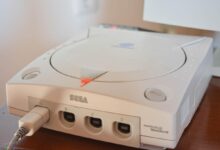
Launched in 1998, the SEGA Dreamcast was, by every objective measure, a triumph of hardware engineering and forward-thinking design. It featured a 200 MHz Hitachi SH-4 CPU, 128-bit graphics, built-in 56K modem for online play, GD-ROM storage (cheaper than DVD), and a sleek, intuitive controller. It was the first console with true online multiplayer infrastructure (Phantasy Star Online, 2000), the first with VMU memory cards offering secondary gameplay, and the first to ship with a web browser. Yet, it arrived in the shadow of Sony’s PlayStation 2—and into a market that had already written SEGA off.
Technical Innovation Ahead of Its TimeThe Dreamcast’s PowerVR2 GPU enabled real-time lighting, texture filtering, and anti-aliasing—features the PS2 wouldn’t match until 2002–2003.Its online architecture was peer-to-peer and standardized—unlike the fragmented, dial-up-dependent PC landscape of the era.SEGA partnered with Microsoft to port DirectX tools, making Dreamcast development significantly faster than PS2’s proprietary, notoriously difficult Net Yaroze and Linux SDKs.Market Timing and the PlayStation 2 ShadowSony’s PlayStation 2 announcement at E3 1999—featuring DVD playback, backward compatibility, and a $299 price tag—was a death knell.Retailers, still burned by Saturn’s failure, refused to commit shelf space.Consumers deferred purchases, waiting for the “next-gen” PS2.
.SEGA’s own financial reports revealed a stark reality: Dreamcast R&D and marketing costs exceeded $500 million, while the company’s total cash reserves stood at just $320 million by mid-1999.As former SEGA CEO David Rosen later reflected: “We built the best console of its generation—but we launched it into a market that no longer believed in us.”.
The Final Pivot: From Hardware to Software-Only
On January 31, 2001, SEGA announced it would discontinue Dreamcast production and exit the hardware business entirely. The decision wasn’t impulsive—it was the culmination of three years of mounting losses ($600M in 2000 alone), eroding retailer confidence, and an inability to secure first-party exclusives that could drive hardware adoption. Crucially, SEGA retained its IP portfolio—Sonic, Phantasy Star, Yakuza, Jet Set Radio—and pivoted to multiplatform publishing. This wasn’t surrender; it was strategic retreat. As SEGA’s 2001 press release stated:
“Our strength lies not in manufacturing silicon—but in creating unforgettable experiences across every platform where gamers gather.”
The Aftermath: Legacy, Lessons, and the Hardware Ghost
The end of SEGA’s hardware division didn’t mark the end of its influence—it marked the beginning of its mythos. In the two decades since, the Dreamcast has been canonized as gaming’s greatest “what if?” Its demise catalyzed industry-wide shifts: the rise of online console gaming, the standardization of developer-friendly SDKs, and the recognition that hardware success depends as much on ecosystem trust as on technical specs. Yet the full scope of The Rise and Fall of SEGA’s Hardware Division extends beyond nostalgia—it’s a masterclass in strategic misalignment.
Financial Realities: The $4.2 Billion Hardware Drain
Between 1983 and 2001, SEGA invested an estimated $4.2 billion in hardware R&D, manufacturing, and marketing—yet generated only $1.8 billion in cumulative hardware revenue. The Saturn alone lost $530 million; the Dreamcast lost $390 million in its final fiscal year. These weren’t abstract numbers—they represented shuttered factories in Japan, laid-off engineers in Redwood City, and abandoned partnerships with Motorola and NEC. As financial analyst Hiroshi Ito noted in a 2002 Nikkei Business review:
“SEGA treated hardware like a sport—winning mattered more than sustainability. When the wins stopped, the infrastructure collapsed.”
Cultural Impact: How SEGA Redefined Gaming IdentitySEGA pioneered the “attitude-driven” console brand—paving the way for Xbox’s “games for gamers” ethos and even Nintendo’s later edgier campaigns (e.g., Super Smash Bros.Ultimate’s “Everyone is Here!”).Its arcade-to-console pipeline influenced Sony’s early focus on arcade ports (Wipeout, Gran Turismo) and Microsoft’s acquisition of Bungie.The Dreamcast’s online infrastructure directly inspired Xbox Live—Microsoft’s 2002 service borrowed Dreamcast’s matchmaking architecture, friend-list system, and even its “online-enabled” icon standard.Modern Echoes: What Today’s Hardware Makers Still Get WrongSEGA’s story resonates in today’s market.The Nintendo Switch’s hybrid model echoes SEGA’s failed 1994 “Nomad” handheld—proof that timing and ecosystem matter more than novelty.Sony’s PS5 Pro controversy (2024) recalls the 32X: a mid-cycle upgrade that fractures consumer trust..
And Microsoft’s Xbox Series S/X split mirrors SEGA’s Saturn/32X confusion—underscoring that hardware fragmentation without clear, consumer-facing value propositions remains a fatal flaw.As game historian Dr.Emily Chen observed in her 2023 MIT Media Lab study: “SEGA didn’t fail because it lacked vision.It failed because it mistook velocity for direction—and confused innovation with iteration.”.
Reassessing the Narrative: Beyond ‘Sonic vs. Mario’
Popular discourse reduces The Rise and Fall of SEGA’s Hardware Division to a cartoonish rivalry: Sonic’s speed versus Mario’s charm; Genesis versus SNES; edgy versus wholesome. But this flattens a far richer, more instructive story. SEGA’s hardware journey was defined not by personality clashes—but by structural tensions: Japanese engineering rigor versus American marketing impulsivity; arcade immediacy versus console longevity; technical ambition versus developer pragmatism.
The CSK Factor: Corporate Governance and Strategic Drift
SEGA’s parent company, CSK Corporation, prioritized quarterly earnings over long-term platform building. Between 1995 and 1999, CSK rotated five different CEOs—each with divergent hardware visions. The Saturn’s rushed launch was ordered by new CEO Hayao Nakayama to “show results before fiscal year-end”; the 32X was championed by R&D head Shoichiro Irimajiri as a “stopgap”; the Dreamcast was greenlit by David Rosen as a “last stand.” This leadership churn created a hardware roadmap with no throughline—only reaction.
Developer Relations: From Empowerment to Erosion
SEGA’s early success with EA, Capcom, and Konami was built on trust: shared development tools, co-marketing funds, and transparent roadmaps. By 1994, that trust was gone. The 32X’s late announcement forced EA to scrap $2M in development; the Saturn’s dual-CPU architecture required developers to write custom drivers for each title. As former Capcom producer Yoshiki Okamoto stated in a 2018 GDC keynote:
“SEGA stopped asking what we needed—and started telling us what we’d build. That’s when we stopped listening.”
The ‘Hardware-First’ Fallacy and the Software Imperative
SEGA’s fatal assumption was that superior hardware would inevitably attract superior software. But history proves the inverse: compelling software drives hardware adoption—not the other way around. Nintendo’s Game Boy sold 118 million units on 8-bit tech because of Tetris and Pokémon. Sony’s PS1 succeeded not because of raw power—but because of Final Fantasy VII. SEGA never produced a software title with the cultural gravity of either. Its best games—Sonic, Virtua Fighter, Shenmue—were brilliant, but insufficiently broad in appeal to sustain a hardware platform alone.
FAQ
What caused SEGA to stop making consoles?
SEGA exited the hardware business in January 2001 after cumulative losses exceeding $2 billion across the Saturn and Dreamcast. Key factors included catastrophic launch missteps (Saturn’s surprise E3 1995 release), hardware fragmentation (32X + Saturn), eroding third-party trust, and an inability to compete with Sony’s PlayStation 2 on price, marketing, and DVD functionality. The company pivoted to third-party software publishing to stabilize finances and leverage its IP portfolio.
Was the Dreamcast technically superior to the PlayStation 2?
Yes—in several key areas. The Dreamcast’s PowerVR2 GPU delivered superior texture filtering, anti-aliasing, and real-time lighting in 1999–2000. Its online infrastructure was more mature and standardized than the PS2’s early online efforts (which required separate network adapters and fragmented services). However, the PS2’s DVD playback, backward compatibility, and broader developer adoption ultimately outweighed Dreamcast’s technical advantages in the marketplace.
How did SEGA’s arcade background hurt its console strategy?
SEGA’s arcade DNA led to hardware optimized for 2D sprite performance and short-session gameplay—mismatched with the emerging 3D, narrative-driven console market of the late 1990s. Its focus on “arcade-perfect” ports (e.g., Virtua Fighter) prioritized technical fidelity over innovation in game design. Meanwhile, Nintendo and Sony invested heavily in tools and middleware that empowered developers to create expansive, story-rich experiences—something SEGA’s fragmented, low-level architecture actively discouraged.
Did SEGA ever attempt a hardware comeback?
No. After exiting hardware in 2001, SEGA consistently reaffirmed its software-only strategy. In 2015, CEO Haruki Satomi stated:
“Hardware requires massive capital, manufacturing control, and supply chain mastery—none of which align with our core competency: creative IP development.”
While SEGA has explored peripherals (e.g., the 2022 Sonic-themed Bluetooth earbuds), it has no plans to re-enter console or handheld manufacturing.
What is SEGA’s most successful hardware platform?
The SEGA Genesis/Mega Drive is SEGA’s most successful hardware platform, with over 30.75 million units sold worldwide (per SEGA’s 2021 corporate report). It remains the only SEGA console to achieve sustained profitability and cultural dominance—particularly in North America and Europe—where it held over 60% of the 16-bit market from 1991 to 1993.
SEGA’s hardware journey remains one of gaming’s most consequential sagas—not because it ended in failure, but because its rise was so brilliant, its missteps so instructive, and its legacy so enduring. From the arcade cabinets of Shinjuku to the Dreamcast’s final online match in 2023 (kept alive by fan-run servers), The Rise and Fall of SEGA’s Hardware Division is more than history. It’s a blueprint for ambition, a warning against fragmentation, and a reminder that in gaming, the hardware is never the hero—the people, the games, and the trust they build are.
Recommended for you 👇
Further Reading: